


02 · Dossiers
- Code
- OWS-AA-003
- Status
- Locked
- Version
- 1.0
- Evidence level
- Mixed source
- Risk level
- Medium
- Last updated
- 29 June 2026
- Red-Team status
- Independent axiomatic audit (two rounds + full-file + repair-confirmation) completed
Interface Analysis · Pilot 3 (Negative Control): Suez 1956–57 — Active Lobby, Zero Output-Link
Through the United States' use of financial leverage against the military operation of Israel + Britain + France in the 1956 Suez crisis, this file tests how deeply the pro-Israel lobby penetrated a foreign-policy decision, using the D-Ladder scale. A negative-control case: the channel was active — Kenen/AZCPA mobilized and pressured Congress — but the decision center did not use that pressure; it actively excluded it. Finding: active channel, zero output-link (D1) — the purest confirmation in the series of the \"channel ≠ depth\" axiom.
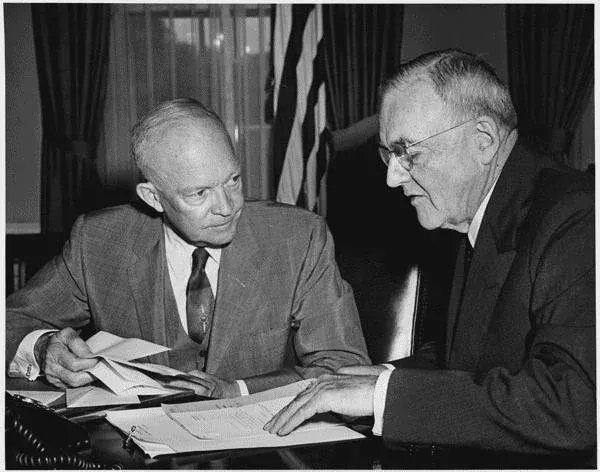
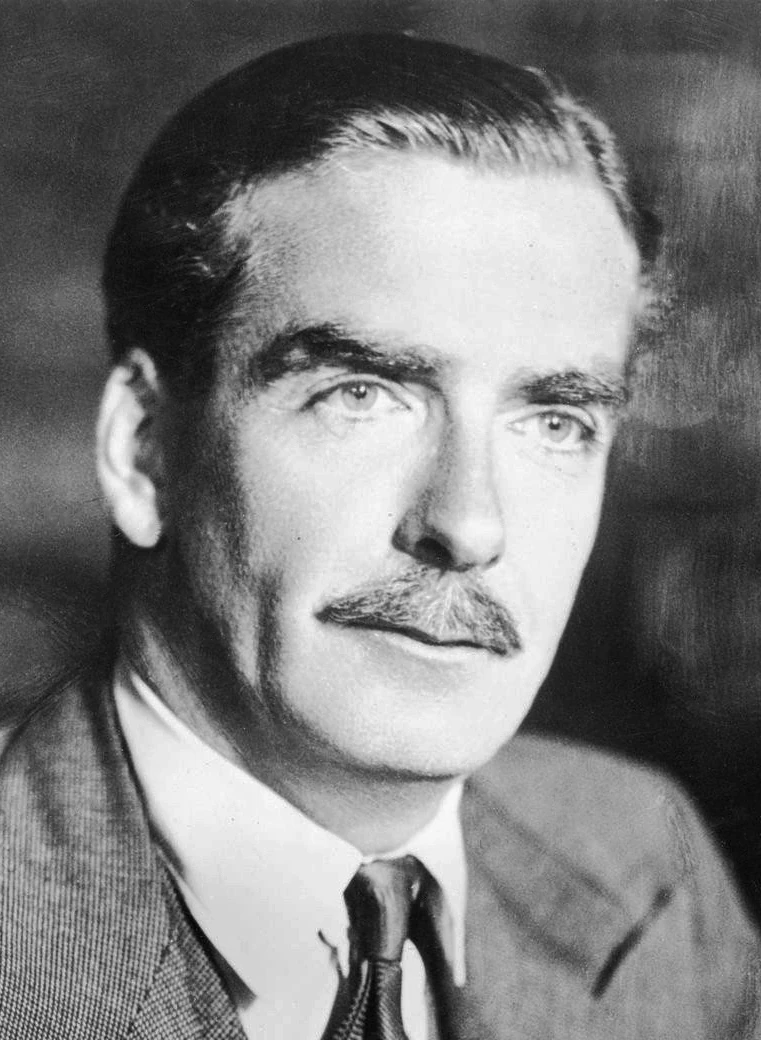
Eisenhower and Dulles, 1956 — the secular-realist decision core of the Suez line; justification law/alliance/finance, not theopolitical. — NARA/DPLA (public domain)
Suez 1956–57 — Active Lobby, Zero Output-Link
Negative Control: How Deeply Did the Active Pro-Israel Lobby Penetrate the Decision Circle?
Status: Locked (v1.0) · Metric: D-Ladder v1.0 (content-required D3) · Case type: Negative control · Core verdict: active channel / zero output-link (D1)
Summary
The United States’ imposition of withdrawal through financial leverage against its own allies — Israel, Britain, France — during the 1956–57 Suez crisis is an ideal negative-control case for testing how deeply the pro-Israel lobby could penetrate a foreign-policy decision. This file decomposes, layer by layer on the D-Ladder scale, both the lobby mobilization around the decision (AZCPA / Si Kenen, congressional pressure, LBJ’s opposition to sanctions) and the decision center’s response to it. The finding is clear: the pro-Israel/Zionist channel was active — telegram campaigns, members of Congress pressuring Dulles, a visible and strong mobilization (C1–C3) — yet the Eisenhower administration did not make that pressure a decision parameter; on the contrary, it explicitly excluded it; the decision was taken despite the lobby. Moreover, in 1956 the mature Christian Zionist (dispensationalist) machine did not yet exist institutionally. So the channel reached the decision center but was not used (D1); it did not change program priority (no D3), it did not enter the decision document (no D4). This result confirms the OWS-2026-004 thesis that “theopolitical discourse does not enter the core; it stays in the shell” — even in a case where the channel was active — and it tests the “channel ≠ depth” axiom in the series’ most demanding form.
0. Case Identity
| Field | Content |
|---|---|
| Case name | The United States forcing its allies to withdraw through financial leverage in the 1956 Suez crisis |
| Core decision | November 1956 financial pressure (conditioning of IMF/Ex-Im credits, sterling threat) + January–March 1957 withdrawal imposition |
| Decision authority | Eisenhower administration (president, Dulles/State, Treasury) — secular-realist decision line |
| Target coalition | Israel + Britain + France |
| External pressure (mobilization) | AZCPA / Si Kenen, congressional pressure, LBJ, Knowland — pro-Israel/Zionist lobby interface |
| Sought theopolitical channel | Evangelical dispensationalist Christian Zionism — institutionally absent in 1956 |
1. Preliminary Epistemic Lock
Labels: [FACT] / [STRONG INFERENCE] / [HYPOTHESIS] / [SPECULATION] / [UNVERIFIED]. Depth: D-Ladder v1.0 (D0 no contact · D1 discursive/mobilization contact, no decision/output link · D2 intermediate mechanism used within the decision system [-I intent / -F function] · D3 the element actually determined program priority / the overcoming of resistance · D4 justification in the primary decision document · D5 counterfactual necessity).
[AXIOM] Channel ≠ depth. A channel being active — lobbying, mobilizing, reaching the decision center — is not, by itself, depth. D rises only if it is proven that the decision system used that channel.
Hinge (D1/D2): The question is not “did it reach the decision center?” but “did the decision system use it?” Reached but not used (especially if actively rejected) = D1. Reached + adopted + made into a legitimacy/coalition instrument = D2-I. “Did it determine the output?” is the question of D3–D5.
Technical term — C4 negative contact: The channel becomes visible up to the decision-preparation level; but the decision system does not use this channel as a justification, instrument, or priority parameter — it excludes it.
2. C1 — Discourse and Synchronization
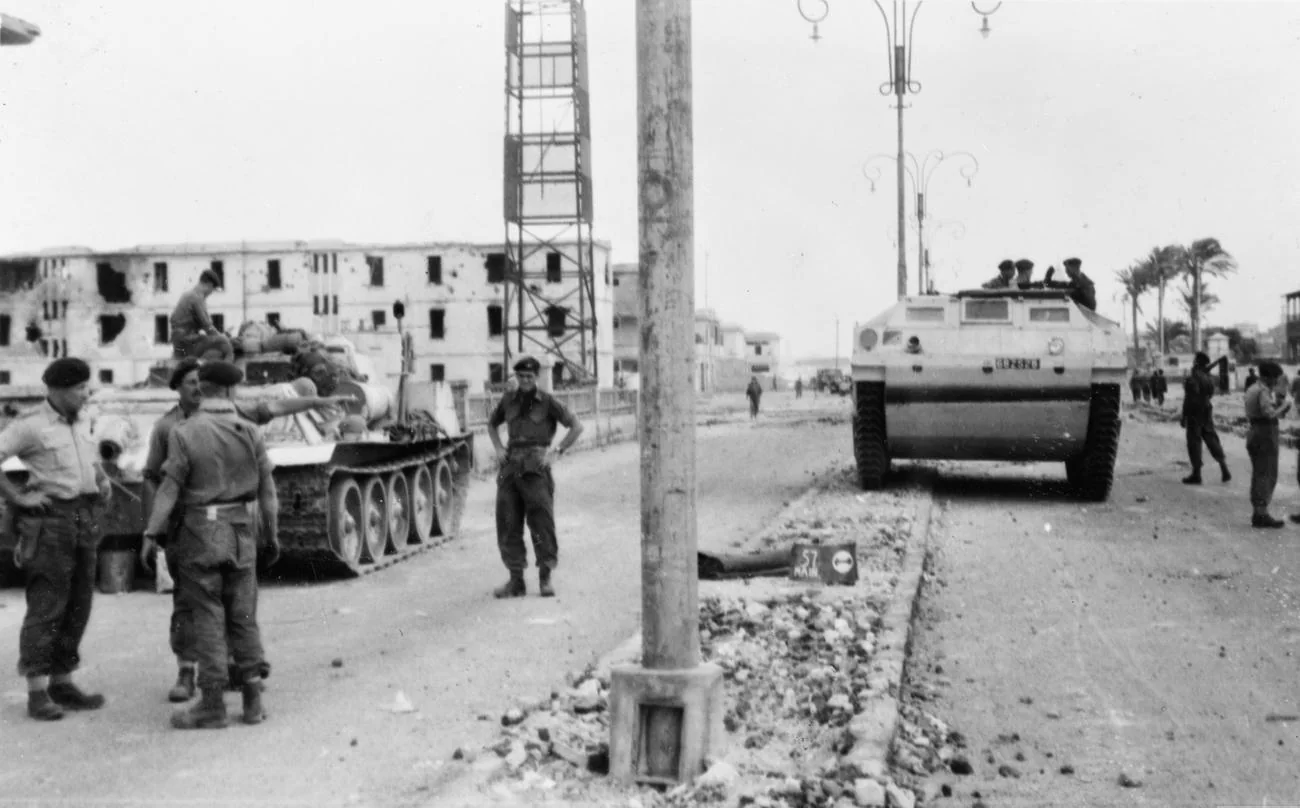
[FACT] The core decision language is secular-realist. The Eisenhower administration’s Suez line is built around international law, the UN process, preserving the Western alliance, blocking Soviet opportunism, and financial stability. On 30 October 1956 Eisenhower wrote to Eden and Mollet that he had learned of the intervention through the press and felt “deep concern”; the justification is diplomatic-strategic, not religious.1
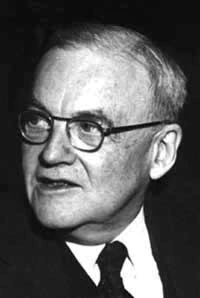
[FACT] Pro-Israel discourse existed at the public/political level (congressional debates, lobby statements). But this discourse does not enter the decision text; the decision authority builds its own justification in realist-strategic language.
C1 depth: Core language D1; pro-Israel discourse exists on the outside but does not enter the decision justification.
3. C2 — Public Opinion and Mobilization
[FACT] The pro-Israel lobby was active during the crisis. Senate Majority Leader Lyndon B. Johnson openly opposed sanctions against Israel; this is independently confirmed in Eisenhower’s own memoirs, in LBJ Library documents, and in the press of the period.234

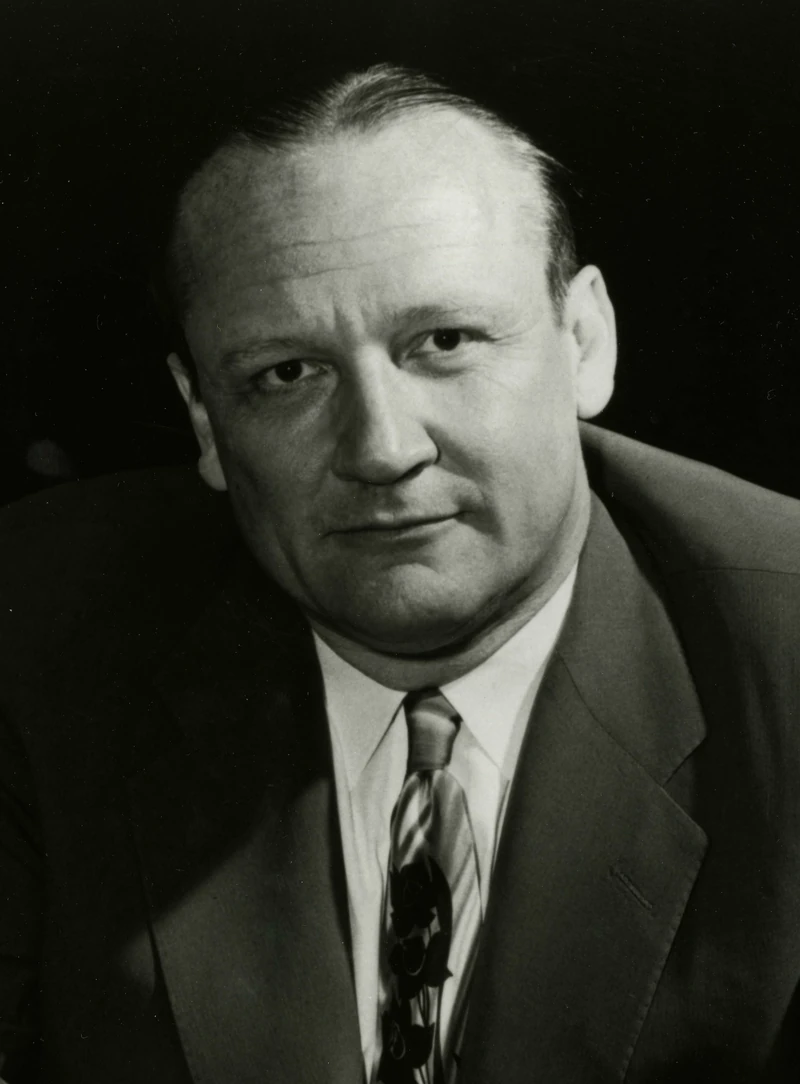
[FACT / self-report — weight-limited] The specific figures of AZCPA chairman Si Kenen’s mobilization (3,500+ community leaders, 1,123 telegrams in the Providence example, 70 members of Congress calling Dulles) rest on a single source: Kenen’s own correspondence, as relayed by Mishali.5 These figures are the self-report of an interest-holder; there is no independent second academic confirmation. The nature of the mobilization — Kenen’s capacity to mobilize thousands through his pyramid model — is independently confirmed.6
[STRONG INFERENCE] As a channel the mobilization was strong and reached the decision center. But it was not used by the decision system — not adopted, not turned into a legitimacy/coalition instrument. Under the hinge rule, this sits at D1, not D2.
C2 depth: Channel strong; decision-system use absent → D1.
4. C3 — Institutional Carriers (channel axis)
[FACT] The pro-Israel/Zionist lobby’s institutional carriers existed: AZCPA (the direct predecessor of AIPAC, under Si Kenen’s leadership), congressional connections, allies at the Senate leadership level (LBJ, Knowland). The channel was active.
[FACT] A critical difference from the Jerusalem case: these carriers were outside the decision room. The lobby applied pressure from outside; the decision circle (Eisenhower, Dulles, Treasury) excluded that pressure rather than taking it into decision preparation. This is negative contact at the C4 level.
[FACT] The second channel sought in 1956 — a mature evangelical dispensationalist Christian Zionist machine — did not exist institutionally. The Moral Majority was founded in 1979, Christians United for Israel in 2006; Hal Lindsey’s mass-market work dates to 1970. In the 1950s the liberal-Protestant ACPC was in decline, and the evangelical apparatus had not yet been born.789 The two channels are distinct: what was active in 1956 was the pro-Israel/Zionist lobby, not the dispensationalist machine.
[STRONG INFERENCE — channel ≠ depth] The lobby’s access is channel, not depth: it is not reflected in the decision record, the decision-makers’ justifications are secular-strategic, and the pressure was actively rejected.
C3 (channel): Active (pro-Israel/Zionist lobby) — but outside the decision room; not used by the decision system.
5. C4 — Decision Preparation and Influence (depth axis)
[FACT] The decision was taken despite, and partly in reverse of, the lobby’s pressure. The US tied financial support to Britain’s alignment with the UN line and its withdrawal: the IMF and Ex-Im/bilateral credit line were conditioned, the threat of selling sterling assets was used; the tripartite party was forced to withdraw. Sources differ on the numbers — the Katz/Parameters line gives “IMF $561M + Ex-Im $600M”; Boughton/IMF gives “$561M drawing + $739M standby” — so the verdict rests on the existence of financial pressure, not on a specific Ex-Im figure.1011
[FACT — ARCHIVAL GUIDE / PRIMARY LOCATOR] The Eisenhower Library Suez Crisis subject guide summarizes the relevant entry in the Ann Whitman File as follows: Eisenhower told Dulles to inform Eban that the upcoming election and the “Jewish vote” would not affect his decision.12 Because the full transcription of the primary note has not yet been obtained, this is a strong negative locator closing D4/D5; it is not the final primary quotation.
[UNVERIFIED — supporting] Israeli Foreign Minister Eban’s statement in the cabinet record of 22 February 1957 (Israel State Archives 42/1957, relayed by Mishali): the public mobilization “surprised the US administration.”13 Visible + strong + ineffective = D1.
[STRONG INFERENCE] Under content-required D3: there is no record of program priority being changed because of the lobby; the existing record runs the other way (the US line stayed firm despite the lobby). There is no theopolitical/lobby justification in the decision documents; the locator is a negative counter-record. Counterfactual necessity is excluded — without the lobby the decision would probably have proceeded with less internal cost. → D3 does not open, no D4, no D5.
C4 depth: D1 (channel reached, decision system did not use it; negative contact).
6. Synthesis and Horizontal Filters
6.1 Influence / control
[STRONG INFERENCE] The most accurate verb is not “influenced”; it is applied pressure / was rejected. The lobby created resistance to the decision; not “without this line the decision would not have come out,” but on the contrary “without this line the decision would have come out more easily.”
6.2 Alternative explanation — causal decomposition
[STRONG INFERENCE] The output is fully explained without the pro-Israel variable: Cold War strategic logic, not losing the Arab world to the USSR in the decolonization wave, moral consistency against the Soviets who were simultaneously crushing Hungary, the flow of oil, and sterling/Western financial stability. The lobby variable could not be isolated as a necessary condition; it remained a layer of pressure that resisted the decision but was overcome.14
6.3 Falsification and pre-registration record
[FACT] Pre-registered expectation before assessment: the D1–D2 band, no D3/D4. Final verdict D1 — consistent with the lower bound of the expectation. [UNVERIFIED] A hard primary source showing that a theopolitical/lobby justification entered a decision document was sought and not found; on the contrary, a negative locator exists. → No D4 reversal was triggered. The negative control shows that the instrument does not inflate depth even in an active channel.
6.4 Chronology filter
26 July 1956 nationalization → 22–24 October secret Sèvres coordination (US not at the table)15 → 29 October Israeli offensive → 30 October Eisenhower “deep concern” → November financial pressure → January–March 1957 intense AZCPA lobbying + withdrawal imposition → March 1957 Israel withdrew under Tiran guarantees. Even at its most intense, the lobby could not change the decision line.
7. Final Case Verdict Card
Multi-axis verdict (D-Ladder v1.0, content-required D3)
| Axis / Object | Verdict | Basis |
|---|---|---|
| C1 discourse | Core D1 | Decision language secular-realist; pro-Israel discourse on the outside |
| C2 mobilization | Channel strong → D1 | Kenen mobilization + LBJ/Knowland; reached, not used |
| C3 carrier (channel) | Active, outside the room | AZCPA/Kenen + Congress; no dispensationalist machine |
| C4 depth | D1 | Decision despite the lobby; negative locator; financial leverage |
| Theopolitical/lobby content in the decision justification | Absent (no D3-content / no D4) | Winning logic is Cold War realism; no lobby justification in the document |
| Counterfactual necessity | Absent (no D5) | Decision proceeded despite the lobby |
Final verdict
[STRONG INFERENCE] In Suez 1956–57 the pro-Israel/Zionist lobby did not remain at the symbolic level: it ran a strong mobilization, found allies at the congressional leadership level (LBJ, Knowland), and visibly reached the decision center. Yet this channel was not used by the decision system; it was actively excluded — the decision was taken despite the lobby. Moreover, in 1956 the mature dispensationalist machine did not exist institutionally. The output is therefore classified as active channel + C4 D1; the core (D3–D5) is theopolitically/lobby-empty. This is the purest confirmation in the series of the “channel ≠ depth” axiom: the channel is active, the depth is near zero.
Suez ↔ Reagan ↔ Jerusalem (series consistency, shared metric)
| Suez 1956–57 | Reagan 1981–86 | Jerusalem 2017–18 | |
|---|---|---|---|
| Channel source | External pro-Israel lobby | Internal administration discourse | Theopolitically-aligned operators |
| Did the decision system use it? | No — actively rejected | Yes — in a legitimacy shell | Yes — gave shape to the decision (not doctrine) |
| Highest depth | D1 | D2-I | D2 (C3 strong channel) |
| Core (D3–D5) | Absent | Absent | Absent |
[STRONG INFERENCE] Under the shared hinge, the three cases are measured on a single ruler and land on different rungs: in Suez the channel was not used (D1), in Reagan internal discourse became a legitimacy instrument (D2-I), in Jerusalem the carriers gave shape to the decision but the winning argument was personalism, not doctrine (C4 D2, empty core). All three confirm the OWS-2026-004 thesis; the negative control (Suez) fixes the bottom of the ladder, thereby proving the measuring power of the series.
Main risk
- Mistaking the active channel (C2/C3) for decision depth (C4/D3) · reading the pro-Israel/Zionist lobby and the dispensationalist Christian Zionist machine as a single channel · treating Kenen’s self-reported figures as independent event-confirmation · mistaking the Eisenhower locator for a final primary quotation.
Open ends
- Primary confirmation of the mobilization figures via the Kenen Papers (Rochester, Box 3) · primary access to the Eban record in Israel State Archives 42/1957 · full transcription of the Eisenhower note (to raise it from locator to [FACT]) · confirmation that the shared hinge rule is satisfied in the AA-002 Reagan D2-I verdict. None of these affects the verdict.
Short score line
Suez 1956–57 = C1 D1 · C2 channel strong/D1 · C3 active outside-the-room channel · C4 D1 · no D3-content · no D4 · no D5.
References
Open War Studies · Evidence is the arbiter Claims may change; the burden of proof remains.
Footnotes
-
Foreign Relations of the United States, 1955–1957, Vol. XVI: Suez Crisis, Document 430 — Eisenhower to Eden and Mollet, 30 October 1956. https://history.state.gov/historicaldocuments/frus1955-57v16/d430 ↩
-
Dwight D. Eisenhower, Waging Peace 1956–1961 (New York, 1965) — LBJ’s and congressional leaders’ opposition to sanctions. ↩
-
LBJ Library, Johnson to Dulles letter, 11 February 1957 (relayed by Roland Popp, Mondoweiss 2008). ↩
-
UPI, “Congress leaders back Eisenhower’s pressure on Israel,” 21 February 1957. ↩
-
Sharon Mishali (Kobby Barda), “Isaiah Kenen, President Eisenhower, and Aid to Israel During the Suez Crisis,” Cambridge Engage (preprint), 2020. Sole source for the mobilization figures; the nature is independently confirmed, the specific numbers are not. ↩
-
Walter L. Hixson, Israel’s Armor: The Israel Lobby and the First Generation of the Palestine Conflict (Cambridge University Press, 2019). ↩
-
Samuel Goldman, God’s Country: Christian Zionism in America (University of Pennsylvania Press, 2018). ↩
-
Daniel G. Hummel, Covenant Brothers: Evangelicals, Jews, and U.S.-Israeli Relations (University of Pennsylvania Press, 2019). ↩
-
Caitlin Carenen, The Fervent Embrace: Liberal Protestants, Evangelicals, and Israel (NYU Press, 2012). ↩
-
U.S. Army War College, Parameters, “Waging Financial War” — Katz line ($561M IMF + $600M Ex-Im + sterling threat). ↩
-
James M. Boughton, “Northwest of Suez: The 1956 Crisis and the IMF,” IMF Working Paper WP/00/192 (2000) — $561M drawing + $739M standby. ↩
-
Eisenhower Presidential Library, Suez Crisis subject guide (Ann Whitman File, Dulles-Herter Series). Note to be conveyed to Eban — primary locator. https://www.eisenhowerlibrary.gov/sites/default/files/research/subject-guides/pdf/suez-crisis.pdf ↩
-
Israel State Archives, Cabinet Record 42/1957 (Eban, relayed by Mishali) — primary access required; currently [UNVERIFIED]. ↩
-
Peter L. Hahn, Caught in the Middle East: U.S. Policy toward the Arab-Israeli Conflict, 1945–1961 (University of North Carolina Press, 2004). ↩
-
Avi Shlaim, “The Protocol of Sèvres, 1956: Anatomy of a War Plot,” International Affairs 73:3 (1997), 509–530. ↩